Reliable contact sensing regardless of target material, surface finish, or ambient lighting
KSS85 Series combines an ultra-thin, adhesive force-sensitive sheet with high-speed digital processing for zero-interference object detection.
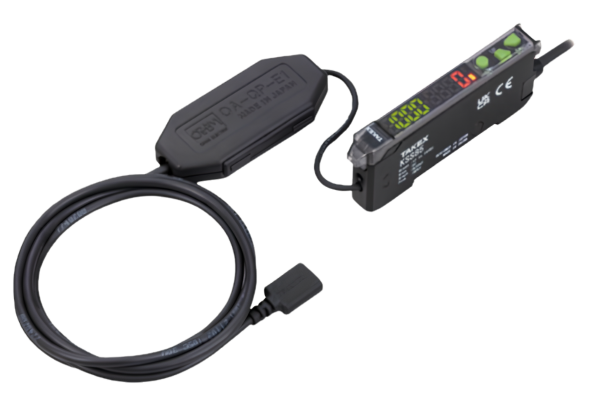
KSS85 | Force-Sensitive Sheet Sensor
With an actuation threshold of just 3 N (approx 300g) and a fast 1ms response speed, KSS85 Series ensures absolute sensing reliability in environments where traditional photoelectric and proximity sensors can struggle.
Simply stick the force-sensitive sheet anywhere you need reliable sensing; whether you're verifying robotic gripper holds, detecting mesh pallets, or tracking lumber on conveyors.
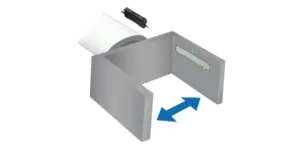

"Just-stick" Mounting

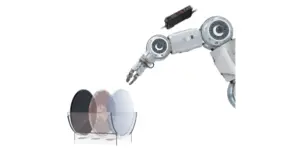
Material-Agnostic

Immune to Light & Glare

Low Actuation Threshold
Choose between Two Adhesive Sheet Types
KSS85 Series features two low-profile sensing sheet options (both under 0.6mm thick) for quick surface mounting without expensive tool modifications
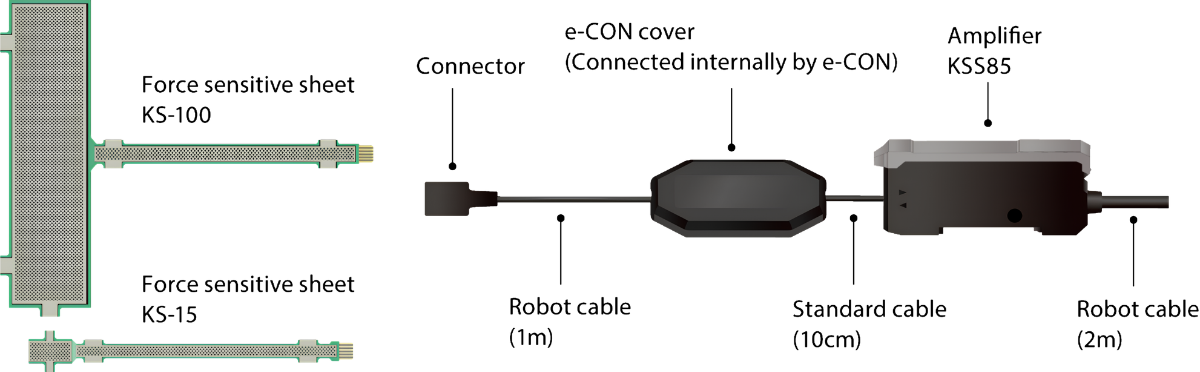
Their ultra-thin design integrates seamlessly into existing setups, allowing quick installation while keeping your project on schedule and within budget.
KS-100
AREA-TYPE ADHESIVE SHEET
Provides a large 100mm x 20mm active zone ideal for broad contact areas, robot grippers, and variable target positions.
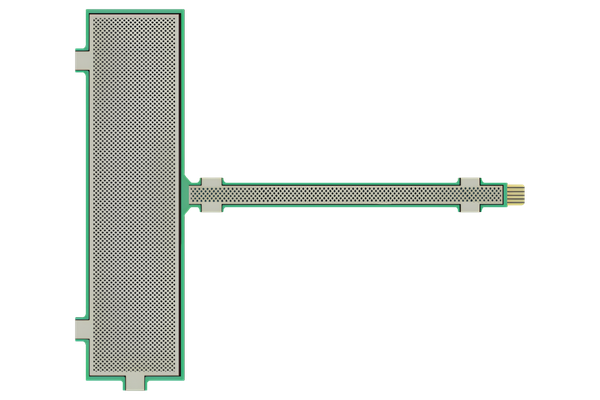
- Ideal for Robot end-effectors, pallets, and large contact surfaces
- 100mm x 20mm Sensing Area
- 109mm x 32mm Footprint
- ≤0.6mm Profile Thickness
- Weighs approx. 4g
KS-15
COMPACT-TYPE ADHESIVE SHEET
Offers a 4mm x 14mm active zone for space-restricted setups, perfect for micro-grippers, targeted contact points, and narrow tool trays.
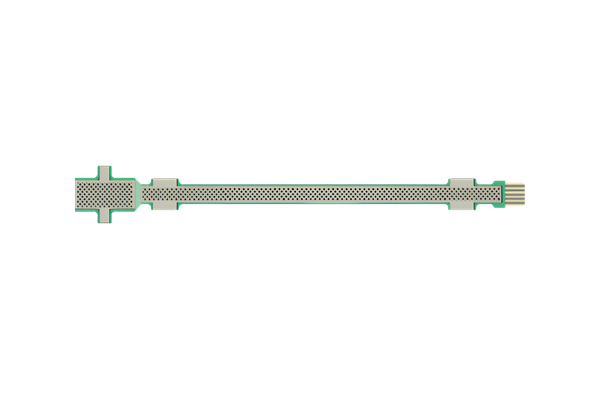
- Ideal for Micro-grippers, restricted spaces, and targeted contact points
- 4mm x 14mm Sensing Area
- 15mm x 9mm Footprint
- ≤0.6mm Profile Thickness
- Weighs approx. 1g
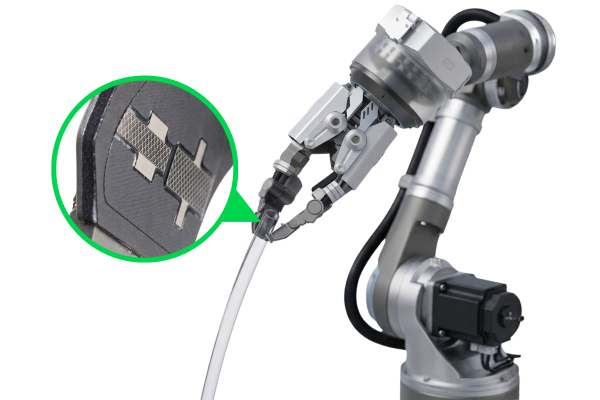
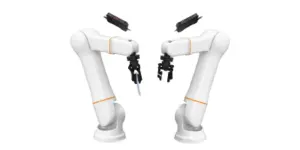
Robotic End-Effector Gripping
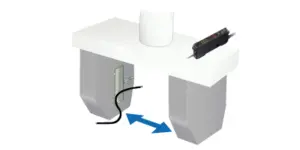
- Verifies item pick/place confirmation on custom robot hands without optical sensor cross-talk.
Achieving reliable pick-and-place confirmation on automated tooling often fails when handling objects with high reflectivity, variable colors, or dark finishes.
Standard optical sensors can suffer from signal wash-out or mutual interference when multiple robot hands operate in close proximity. By integrating the ultra-thin KS-100 or KS-15 sheet directly onto the gripper jaws, detection relies purely on physical contact force (3 N or greater). This ensures positive gripping verification for complex end-effectors without optical false triggers or cross-talk.
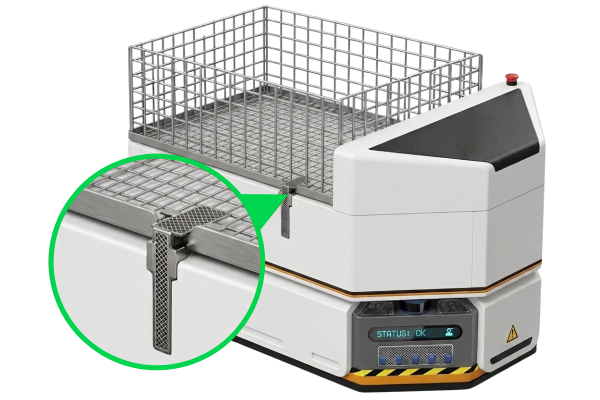
Mesh & Open-Structure Detection
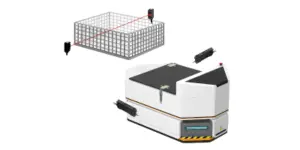
- Reliably detects wire mesh pallets, open cages, or perforated containers that traditional photo-eyes miss.
Detecting perforated containers, wire mesh pallets, or skeletal framework components presents a major hurdle for photo-electric and ultrasonic sensors, which often pass right through gaps or misread irregular surfaces.
KSS85 solves this by providing a physical contact zone that triggers as soon as the weight or landing pressure of the mesh rest on the sensor sheet. By eliminating optical pass-through errors, automated guided vehicles (AGVs) and conveyor drop points receive 100% reliable presence confirmation for wire mesh pallets and open cages.
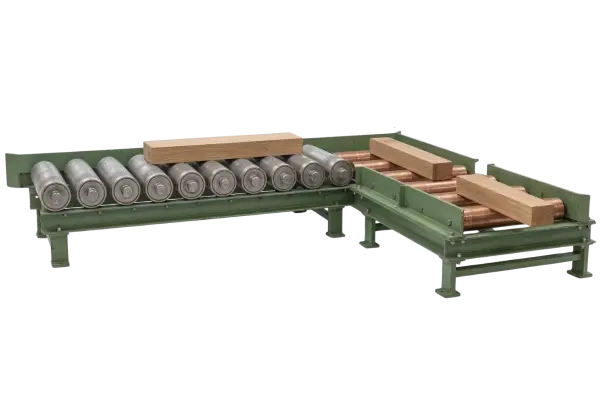
Irregular Material Tracking
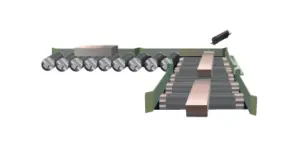
- Confirms physical contact for moving wires, flexible tubing, or irregular materials in transit.
In dynamic automated production, flexible components such as routing cables, rubber hosing, or incoming lumber, rarely arrive in identical orientations or fixed positions.
Optical beams can miss shifting edges, and mechanical limit switches lack the surface area to catch off-centre impacts. Adhesive force-sensitive sheets can be applied along guide channels, wall surfaces, or receiving beds to create an extended target zone. Whether a cable sways or a piece of timber hits at an angle, physical contact with the sheet immediately registers arrival.
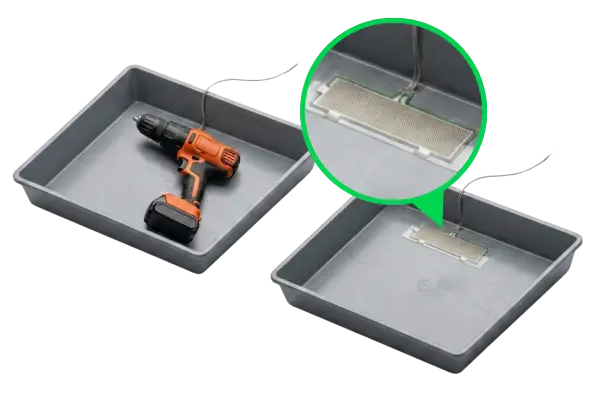
Low-Profile Equipment Switches & Tool Trays
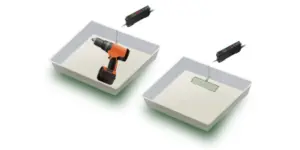
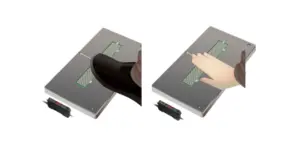
- Mounts inside shallow tool trays or machine housings to act as an ultra-flat start switch.
Space-constrained machinery often lacks the internal clearance required for bulky industrial push-buttons or standard proximity sensors.
With a total profile thickness under 0.6mm, KS series sheets stick seamlessly into shallow tool nesting trays, custom control panels, or narrow machine housings. This allows engineers to convert virtually any flat or curved surface into an immediate start switch or tool-nesting verification point without modifying structural designs or sacrificing valuable machine footprint.
If you've got questions, we've got answers
Find answers to commonly asked questions about KSS85 below. If you can't find what you are looking for here, please reach out to our team.
What is the TAKEX KSS85 Series?
KSS85 Series is a force-sensitive contact sensor designed for reliable presence and grip verification. It pairs an ultra-thin adhesive sensing sheet with a high-speed digital processing amplifier, detecting target objects based on physical contact rather than optical or electrical properties.
What key advantages does it offer over traditional optical or proximity sensors?
By replacing optical sensing with direct physical contact, KSS85 overcomes common environmental and material limitations through three primary advantages:
| Material-Agnostic |
KSS85 Reliably detects target objects regardless of color, transparency, surface texture, or shape, making it ideal for challenging targets like glass, wire mesh, or dark rubber. |
| Immune to Glare & Ambient Light | Because it relies on direct physical pressure, it is completely unaffected by optical reflections, ambient lighting variations, or cross-talk from adjacent photoelectric sensors. |
| "Just-Stick" Installation | Surface-mountable adhesive sheets eliminate the need for complex mounting brackets, physical space modifications, or structural overhauls. |
What sensing sheet sizes and cable options are available?
TAKEX offers two sensor sheet configurations to match different space requirements, both utilizing flexible 2m robot cables suitable for moving machinery:
| KS-15 (Small Type) | Features a compact 4mm x 14mm detecting area and weighs just 1g. |
| KS-100 (Area Type) | Features a broader 20mm x 100mm detecting area and weighs 4g. |
What are the key electrical and performance specifications?
Engineered for high-speed industrial automation, the sensor pairs broad electrical compatibility with robust mechanical performance across its primary technical specifications:
| Actuation Threshold | Triggers at 3 N (approx. 300g) of force. |
| Response Speed |
Rapid response time of 1ms. |
| Power Supply & Consumption | Operates on 12–24 VDC. Current consumption is ≤ 25mA (600 mW) in Normal mode and drops to ≤ 20mA (480 mW) in ECO mode. |
| Outputs & Control | Field-switchable between NPN and PNP open collector outputs, as well as Normally Open (NO) or Normally Closed (NC) operation modes. |
| Durability | Rated for over 1,000,000 operations under standard 300g load conditions. |
How is the sensor calibrated and monitored?
The amplifier unit features a dual 4-digit LED display (red for current signal level, green for target threshold). Sensitivity can be set via auto/manual adjustment or maximum sensitivity teaching. It also includes built-in output timer functions (ON delay, OFF delay, ON/OFF delay, or One-Shot) adjustable from 1 ms to 9999 ms.
What installation practices or accessories are recommended?
To ensure long-term reliability and straightforward integration, TAKEX recommends the following setup and wiring practices:
| Protective Overlay | TAKEX recommends placing a 1 mm thick CR rubber sheet (A60 Shore hardness) over the sensing sheet to optimize force distribution and protect against physical wear. |
| Wiring | The system uses standard e-CON connector assemblies for quick attachment to the amplifier unit. |
What are typical industrial applications?
- Confirming object grip on robotic end-effectors without optical interference
- Verifying the presence of wire mesh pallets, mesh containers, or irregular tools in trays
- Detecting flexible items like cables or tubes passing through unfixed positions
- Arrival confirmation for lumber or heavy goods along conveyor side-walls
- Creating custom, low-profile manual start switches on machine surfaces
Subscribe
Sign up to receive latest news releases and product updates